Showing posts with label m2ts. Show all posts

Wednesday, August 21, 2019

MPEG news: a report from the 127th meeting, Gothenburg, Sweden

The original blog post can be found at the Bitmovin Techblog and has been modified/updated here to focus on and highlight research aspects. Additionally, this version of the blog post will be also posted at ACM SIGMM Records.

MPEG News Archive
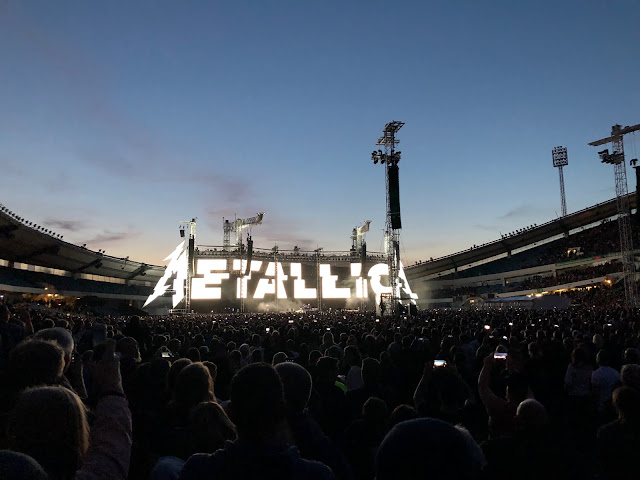
Plenary of the 127th MPEG Meeting in Gothenburg, Sweden.
The 126th MPEG meeting concluded on March 29, 2019 in Geneva, Switzerland with the following topics:
  • Versatile Video Coding (VVC) enters formal approval stage, experts predict 35-60% improvement over HEVC
  • Essential Video Coding (EVC) promoted to Committee Draft
  • Common Media Application Format (CMAF) 2nd edition promoted to Final Draft International Standard
  • Dynamic Adaptive Streaming over HTTP (DASH) 4th edition promoted to Final Draft International Standard
  • Carriage of Point Cloud Data Progresses to Committee Draft
  • JPEG XS carriage in MPEG-2 TS promoted to Final Draft Amendment of ISO/IEC 13818-1 7th edition
  • Genomic information representation – WG11 issues a joint call for proposals on genomic annotations in conjunction with ISO TC 276/WG 5
  • ISO/IEC 23005 (MPEG-V) 4th Edition – WG11 promotes the Fourth edition of two parts of “Media Context and Control” to the Final Draft International Standard (FDIS) stage

The corresponding press release of the 127th MPEG meeting can be found here: https://mpeg.chiariglione.org/meetings/127

Versatile Video Coding (VVC)

The Moving Picture Experts Group (MPEG) is pleased to announce that Versatile Video Coding (VVC) progresses to Committee Draft, experts predict 35-60% improvement over HEVC.

The development of the next major generation of video coding standard has achieved excellent progress, such that MPEG has approved the Committee Draft (CD, i.e., the text for formal balloting in the ISO/IEC approval process).

The new VVC standard will be applicable to a very broad range of applications and it will also provide additional functionalities. VVC will provide a substantial improvement in coding efficiency relative to existing standards. The improvement in coding efficiency is expected to be quite substantial – e.g., in the range of 35–60% bit rate reduction relative to HEVC although it has not yet been formally measured. Relative to HEVC means for equivalent subjective video quality at picture resolutions such as 1080p HD or 4K or 8K UHD, either for standard dynamic range video or high dynamic range and wide color gamut content for levels of quality appropriate for use in consumer distribution services. The focus during the development of the standard has primarily been on 10-bit 4:2:0 content, and 4:4:4 chroma format will also be supported.

The VVC standard is being developed in the Joint Video Experts Team (JVET), a group established jointly by MPEG and the Video Coding Experts Group (VCEG) of ITU-T Study Group 16. In addition to a text specification, the project also includes the development of reference software, a conformance testing suite, and a new standard ISO/IEC 23002-7 specifying supplemental enhancement information messages for coded video bitstreams. The approval process for ISO/IEC 23002-7 has also begun, with the issuance of a CD consideration ballot.

Research aspects: VVC represents the next generation video codec to be deployed in 2020+ and basically the same research aspects apply as for previous generations, i.e., coding efficiency, performance/complexity, and objective/subjective evaluation. Luckily, JVET documents are freely available including the actual standard (committee draft), software (and its description), and common test conditions. Thus, researcher utilizing these resources are able to conduct reproducible research when contributing their findings and code improvements back to the community at large. 

Essential Video Coding (EVC)

MPEG-5 Essential Video Coding (EVC) promoted to Committee Draft

Interestingly, at the same meeting as VVC, MPEG promoted MPEG-5 Essential Video Coding (EVC) to Committee Draft (CD). The goal of MPEG-5 EVC is to provide a standardized video coding solution to address business needs in some use cases, such as video streaming, where existing ISO video coding standards have not been as widely adopted as might be expected from their purely technical characteristics.

The MPEG-5 EVC standards includes a baseline profile that contains only technologies that are over 20 years old or are otherwise expected to be royalty-free. Additionally, a main profile adds a small number of additional tools, each providing significant performance gain. All main profile tools are capable of being individually switched off or individually switched over to a corresponding baseline tool. Organizations making proposals for the main profile have agreed to publish applicable licensing terms within two years of FDIS stage, either individually or as part of a patent pool.

Research aspects: Similar research aspects can be described for EVC and from a software engineering perspective it could be also interesting to further investigate this switching mechanism of individual tools or/and fall back option to baseline tools. Naturally, a comparison with next generation codecs such as VVC is interesting per se. The licensing aspects itself are probably interesting for other disciplines but that is another story...

Common Media Application Format (CMAF)

MPEG ratified the 2nd edition of the Common Media Application Format (CMAF)

The Common Media Application Format (CMAF) enables efficient encoding, storage, and delivery of digital media content (incl. audio, video, subtitles among others), which is key to scaling operations to support the rapid growth of video streaming over the internet. The CMAF standard is the result of widespread industry adoption of an application of MPEG technologies for adaptive video streaming over the Internet, and widespread industry participation in the MPEG process to standardize best practices within CMAF.

The 2nd edition of CMAF adds support for a number of specifications that were a result of significant industry interest. Those include
  • Advanced Audio Coding (AAC) multi-channel;
  • MPEG-H 3D Audio;
  • MPEG-D Unified Speech and Audio Coding (USAC);
  • Scalable High Efficiency Video Coding (SHVC);
  • IMSC 1.1 (Timed Text Markup Language Profiles for Internet Media Subtitles and Captions); and
  • additional HEVC video CMAF profiles and brands.
This edition also introduces CMAF supplemental data handling as well as new structural brands for CMAF that reflects the common practice of the significant deployment of CMAF in industry. Companies adopting CMAF technology will find the specifications introduced in the 2nd Edition particularly useful for further adoption and proliferation of CMAF in the market.

Research aspects: see below (DASH).

Dynamic Adaptive Streaming over HTTP (DASH)

MPEG approves the 4th edition of Dynamic Adaptive Streaming over HTTP (DASH)

The 4th edition of MPEG-DASH comprises the following features:
service description that is intended by the service provider on how the service is expected to be consumed;
  • a method to indicate the times corresponding to the production of associated media;
  • a mechanism to signal DASH profiles and features, employed codec and format profiles; and
  • supported protection schemes present in the Media Presentation Description (MPD).
It is expected that this edition will be published later this year. 

Research aspects: CMAF 2nd and DASH 4th edition come along with a rich feature set enabling a plethora of use cases. The underlying principles are still the same and research issues arise from updated application and service requirements with respect to content complexity, time aspects (mainly delay/latency), and quality of experience (QoE). The DASH-IF awards the excellence in DASH award at the ACM Multimedia Systems conference and an overview about its academic efforts can be found here. For example, see here our recent research on bandwidth prediction in low-latency chunked streaming. Additionally, our tutorial at ACM Multimedia 2019 about a journey towards fully immersive media access reviews state of the art in this area and how it could be extended enabling 6DoF HAS services through point cloud compression.

Carriage of Point Cloud Data

MPEG progresses the Carriage of Point Cloud Data to Committee Draft

At its 127th meeting, MPEG has promoted the carriage of point cloud data to the Committee Draft stage, the first milestone of ISO standard development process. This standard is the first one introducing the support of volumetric media in the industry-famous ISO base media file format family of standards.

This standard supports the carriage of point cloud data comprising individually encoded video bitstreams within multiple file format tracks in order to support the intrinsic nature of the video-based point cloud compression (V-PCC). Additionally, it also allows the carriage of point cloud data in one file format track for applications requiring multiplexed content (i.e., the video bitstream of multiple components is interleaved into one bitstream).

This standard is expected to support efficient access and delivery of some portions of a point cloud object considering that in many cases that entire point cloud object may not be visible by the user depending on the viewing direction or location of the point cloud object relative to other objects. It is currently expected that the standard will reach its final milestone by the end of 2020.

Research aspects: MPEG's Point Cloud Compression (PCC) comes in two flavors, video- and geometric-based but still requires to be packaged into file and delivery formats. MPEG's choice here is the ISO base media file format and the efficient carriage of point cloud data is characterized by both functionality (i.e., enabling the required used cases) and performance (such as low overhead).

MPEG 2 Systems/Transport Stream

JPEG XS carriage in MPEG-2 TS promoted to Final Draft Amendment of ISO/IEC 13818-1 7th edition

At its 127th meeting, WG11 (MPEG) has extended ISO/IEC 13818-1 (MPEG-2 Systems) – in collaboration with WG1 (JPEG) – to support ISO/IEC 21122 (JPEG XS) in order to support industries using still image compression technologies for broadcasting infrastructures. The specification defines a JPEG XS elementary stream header and specifies how the JPEG XS video access unit (specified in ISO/IEC 21122-1) is put into a Packetized Elementary Stream (PES). Additionally, the specification also defines how the System Target Decoder (STD) model can be extended to support JPEG XS video elementary streams.

Genomic information representation

WG11 issues a joint call for proposals on genomic annotations in conjunction with ISO TC 276/WG 5

The introduction of high-throughput DNA sequencing has led to the generation of large quantities of genomic sequencing data that have to be stored, transferred and analyzed. So far WG 11 (MPEG) and ISO TC 276/WG 5 have addressed the representation, compression and transport of genome sequencing data by developing the ISO/IEC 23092 standard series also known as MPEG-G. They provide a file and transport format, compression technology, metadata specifications, protection support, and standard APIs for the access of sequencing data in the native compressed format.

An important element in the effective usage of sequencing data is the association of the data with the results of the analysis and annotations that are generated by processing pipelines and analysts. At the moment such association happens as a separate step, standard and effective ways of linking data and meta information derived from sequencing data are not available.

At its 127th meeting, MPEG and ISO TC 276/WG 5 issued a joint Call for Proposals (CfP) addressing the solution of such problem. The call seeks submissions of technologies that can provide efficient representation and compression solutions for the processing of genomic annotation data.

Companies and organizations are invited to submit proposals in response to this call. Responses are expected to be submitted by the 8th January 2020 and will be evaluated during the 129th WG 11 (MPEG) meeting. Detailed information, including how to respond to the call for proposals, the requirements that have to be considered, and the test data to be used, is reported in the documents N18648, N18647, and N18649 available at the 127th meeting website (http://mpeg.chiariglione.org/meetings/127). For any further question about the call, test conditions, required software or test sequences please contact: Joern Ostermann, MPEG Requirements Group Chair (ostermann@tnt.uni-hannover.de) or Martin Golebiewski, Convenor ISO TC 276/WG 5 (martin.golebiewski@h-its.org).

ISO/IEC 23005 (MPEG-V) 4th Edition

WG11 promotes the Fourth edition of two parts of “Media Context and Control” to the Final Draft International Standard (FDIS) stage

At its 127th meeting, WG11 (MPEG) promoted the 4th edition of two parts of ISO/IEC 23005 (MPEG-V; Media Context and Control) standards to the Final Draft International Standard (FDIS). The new edition of ISO/IEC 23005-1 (architecture) enables ten new use cases, which can be grouped into four categories: 3D printing, olfactory information in virtual worlds, virtual panoramic vision in car, and adaptive sound handling. The new edition of ISO/IEC 23005-7 (conformance and reference software) is updated to reflect the changes made by the introduction of new tools defined in other parts of ISO/IEC 23005. More information on MPEG-V and its parts 1-7 can be found at https://mpeg.chiariglione.org/standards/mpeg-v.

Finally, the unofficial highlight of the 127th MPEG meeting we certainly found while scanning the scene in Gothenburg on Tuesday night...


Tuesday, July 28, 2015

MPEG news: a report from the 112th meeting, Warsaw, Poland


This blog post is also available at at bitmovin tech blog and SIGMM records.

The 112th MPEG meeting in Warsaw, Poland was a special meeting for me. It was my 50th MPEG meeting which roughly accumulates to one year of MPEG meetings (i.e., one year of my life I've spend in MPEG meetings incl. traveling - scary, isn't it? ... more on this in another blog post). But what happened at this 112th MPEG meeting (my 50th meeting)...

  • Requirements: CDVA, Future of Video Coding Standardization (no acronym yet), Genome compression
  • Systems: M2TS (ISO/IEC 13818-1:2015), DASH 3rd edition, Media Orchestration (no acronym yet), TRUFFLE
  • Video/JCT-VC/JCT-3D: MPEG-4 AVC, Future Video Coding, HDR, SCC
  • Audio: 3D audio
  • 3DG: PCC, MIoT, Wearable
MPEG Friday Plenary. Photo (c) Christian Timmerer.
As usual, the official press release and other publicly available documents can be found here. Let's dig into the different subgroups:
Requirements

In requirements experts were working on the Call for Proposals (CfP) for Compact Descriptors for Video Analysis (CDVA) including an evaluation framework. The evaluation framework includes 800-1000 objects (large objects like building facades, landmarks, etc.; small(er) objects like paintings, books, statues, etc.; scenes like interior scenes, natural scenes, multi-camera shots) and the evaluation of the responses should be conducted for the 114th meeting in San Diego.

The future of video coding standardization is currently happening in MPEG and shaping the way for the successor of of the HEVC standard. The current goal is providing (native) support for scalability (more than two spatial resolutions) and 30% compression gain for some applications (requiring a limited increase in decoder complexity) but actually preferred is 50% compression gain (at a significant increase of the encoder complexity). MPEG will hold a workshop at the next meeting in Geneva discussing specific compression techniques, objective (HDR) video quality metrics, and compression technologies for specific applications (e.g., multiple-stream representations, energy-saving encoders/decoders, games, drones). The current goal is having the International Standard for this new video coding standard around 2020.

MPEG has recently started a new project referred to as Genome Compression which is about of course about the compression of genome information. A big dataset has been collected and experts working on the Call for Evidence (CfE). The plan is holding a workshop at the next MPEG meeting in Geneva regarding prospect of Genome Compression and Storage Standardization targeting users, manufactures, service providers, technologists, etc.

Systems


Summer in Warsaw. Photo (c) Christian Timmerer.
The 5th edition of the MPEG-2 Systems standard has been published as ISO/IEC 13818-1:2015 on the 1st of July 2015 and is a consolidation of the 4th edition + Amendments 1-5.

In terms of MPEG-DASH, the draft text of ISO/IEC 23009-1 3rd edition comprising 2nd edition + COR 1 + AMD 1 + AMD 2 + AMD 3 + COR 2 is available for committee internal review. The expected publication date is scheduled for, most likely, 2016. Currently, MPEG-DASH includes a lot of activity in the following areas: spatial relationship description, generalized URL parameters, authentication, access control, multiple MPDs, full duplex protocols (aka HTTP/2 etc.), advanced and generalized HTTP feedback information, and various core experiments:
  • SAND (Sever and Network Assisted DASH)
  • FDH (Full Duplex DASH)
  • SAP-Independent Segment Signaling (SISSI)
  • URI Signing for DASH
  • Content Aggregation and Playback COntrol (CAPCO)
In particular, the core experiment process is very open as most work is conducted during the Ad hoc Group (AhG) period which is discussed on the publicly available MPEG-DASH reflector.

MPEG systems recently started an activity that is related to media orchestration which applies to capture as well as consumption and concerns scenarios with multiple sensors as well as multiple rendering devices, including one-to-many and many-to-one scenarios resulting in a worthwhile, customized experience.

Finally, the systems subgroup started an exploration activity regarding real-time streaming of file (a.k.a TRUFFLE) which should perform an gap analysis leading to extensions of the MPEG Media Transport (MMT) standard. However, some experts within MPEG concluded that most/all use cases identified within this activity could be actually solved with existing technology such as DASH. Thus, this activity may still need some discussions...

Video/JCT-VC/JCT-3D

The MPEG video subgroup is working towards a new amendment for the MPEG-4 AVC standard covering resolutions up to 8K and higher frame rates for lower resolution. Interestingly, although MPEG most of the time is ahead of industry, 8K and high frame rate is already supported in browser environments (e.g., using bitdash 8K, HFR) and modern encoding platforms like bitcodin. However, it's good that we finally have means for an interoperable signaling of this profile.

In terms of future video coding standardization, the video subgroup released a call for test material. Two sets of test sequences are already available and will be investigated regarding compression until next meeting.

After a successful call for evidence for High Dynamic Range (HDR), the technical work starts in the video subgroup with the goal to develop an architecture ("H2M") as well as three core experiments (optimization without HEVC specification change, alternative reconstruction approaches, objective metrics).

The main topic of the JCT-VC was screen content coding (SCC) which came up with new coding tools that are better compressing content that is (fully or partially) computer generated leading to a significant improvement of compression, approx. or larger than 50% rate reduction for specific screen content.

Audio

The audio subgroup is mainly concentrating on 3D audio where they identified the need for intermediate bitrates between 3D audio phase 1 and 2. Currently, phase 1 identified 256, 512, 1200 kb/s whereas phase 2 focuses on 128, 96, 64, 48 kb/s. The broadcasting industry needs intermediate bitrates and, thus, phase 2 is extended to bitrates between 128 and 256 kb/s.

3DG

MPEG 3DG is working on point cloud compression (PCC) for which open source software has been identified. Additionally, there're new activity in the area of Media Internet of Things (MIoT) and wearable computing (like glasses and watches) that could lead to new standards developed within MPEG. Therefore, stay tuned on these topics as they may shape your future.

The week after the MPEG meeting I met the MPEG convenor and the JPEG convenor again during ICME2015 in Torino but that's another story...
L. Chiariglione, H. Hellwagner, T. Ebrahimi, C. Timmerer (from left to right) during ICME2015. Photo (c) T. Ebrahimi.


Friday, April 25, 2014

MPEG news: a report from the 108th meeting, Valencia, Spain

This blog post is also available at bitmovin tech blog and SIGMM records.

The 108th MPEG meeting was held at the Palacio de Congresos de Valencia in Spain featuring the following highlights (no worries about the acronyms, this is on purpose and they will be further explained below):
  • Requirements: PSAF, SCC, CDVA
  • Systems: M2TS, MPAF, Green Metadata
  • Video: CDVS, WVC, VCB
  • JCT-VC: SHVC, SCC
  • JCT-3D: MV/3D-HEVC, 3D-AVC
  • Audio: 3D audio 
Opening Plenary of the 108th MPEG meeting in Valencia, Spain.
The official MPEG press release can be downloaded from the MPEG Web site. Some of the above highlighted topics will be detailed in the following and, of course, there’s an update on DASH-related matters at the end.

As indicated above, MPEG is full of (new) acronyms and in order to become familiar with those, I’ve put them deliberately in the overview but I will explain them further below.

PSAF – Publish/Subscribe Application Format

Publish/subscribe corresponds to a new network paradigm related to content-centric networking (or information-centric networking) where the content is addressed by its name rather than location. An application format within MPEG typically defines a combination of existing MPEG tools jointly addressing the needs for a given application domain, in this case, the publish/subscribe paradigm. The current requirements and a preliminary working draft are publicly available.

SCC – Screen Content Coding

I’ve introduced this topic in my previous report and this meeting the responses to the CfP have been evaluated. In total, seven responses have been received which meet all requirements and, thus, the actual standardization work is transferred to JCT-VC. Interestingly, the results of the CfP are publicly available. Within JCT-VC, a first test model has been defined and core experiments have been established. I will report more on this as an output of the next meetings…

CDVA – Compact Descriptors for Video Analysis

This project has been renamed from compact descriptors for video search to compact descriptors for video analysis and comprises a publicly available vision statement. That is, interested parties are welcome to join this new activity within MPEG.

M2TS – MPEG-2 Transport Stream

At this meeting, various extensions to M2TS have been defined such as transport of multi-view video coding depth information and extensions to HEVC, delivery of timeline for external data as well as carriage of layered HEVC, green metadata, and 3D audio. Hence, M2TS is still very active and multiple amendments are developed in parallel.

MPAF – Multimedia Preservation Application Format

The committee draft for MPAF has been approved and, in this context, MPEG-7 is extended with additional description schemes.

Green Metadata

Well, this standard does not have its own acronym; it’s simply referred to as MPEG-GREEN. The draft international standard has been approved and national bodies will vote on it at the JTC 1 level. It basically defines metadata to allow clients operating in an energy-efficient way. It comes along with amendments to M2TS and ISOBMFF that enable the carriage and storage of this metadata.

CDVS – Compact Descriptors for Visual Search

CDVS is at DIS stage and provide improvements on global descriptors as well as non-normative improvements of key-point detection and matching in terms of speedup and memory consumption. As all standards at DIS stage, national bodies will vote on it at the JTC 1 level. 

What’s new in the video/audio-coding domain?
  • WVC – Web Video Coding: This project reached final draft international standard with the goal to provide a video-coding standard for Web applications. It basically defines a profile of the MPEG-AVC standard including those tools not encumbered by patents.
  • VCB – Video Coding for Browsers: The committee draft for part 31 of MPEG-4 defines video coding for browsers and basically defines VP8 as an international standard. This is explains also the difference to WVC.
  • SHVC – Scalable HEVC extensions: As for SVC, SHVC will be defined as an amendment to HEVC providing the same functionality as SVC, scalable video coding functionality.
  • MV/3D-HEVC, 3D-AVC: These are multi-view and 3D extensions for the HEVC and AVC standards respectively.
  • 3D Audio: Also, no acronym for this standard although I would prefer 3DA. However, CD has been approved at this meeting and the plan is to have DIS at the next meeting. At the same time, the carriage and storage of 3DA is being defined in M2TS and ISOBMFF respectively. 
Finally, what’s new in the media transport area, specifically DASH and MMT?

As interested readers know from my previous reports, DASH 2nd edition has been approved has been approved some time ago. In the meantime, a first amendment to the 2nd edition is at draft amendment state including additional profiles (mainly adding xlink support) and time synchronization. A second amendment goes to the first ballot stage referred to as proposed draft amendment and defines spatial relationship description, generalized URL parameters, and other extensions. Eventually, these two amendments will be integrated in the 2nd edition which will become the MPEG-DASH 3rd edition. Also a corrigenda on the 2nd edition is currently under ballot and new contributions are still coming in, i.e., there is still a lot of interest in DASH. For your information – there will be two DASH-related sessions at Streaming Forum 2014.

On the other hand, MMT’s amendment 1 is currently under ballot and amendment 2 defines header compression and cross-layer interface. The latter has been progressed to a study document which will be further discussed at the next meeting. Interestingly, there will be a MMT developer’s day at the 109th MPEG meeting as in Japan, 4K/8K UHDTV services will be launched based on MMT specifications and in Korea and China, implementation of MMT is now under way. The developer’s day will be on July 5th (Saturday), 2014, 10:00 – 17:00 at the Sapporo Convention Center. Therefore, if you don’t know anything about MMT, the developer’s day is certainly a place to be.

Contact:

Dr. Christian Timmerer
CIO bitmovin GmbH | christian.timmerer@bitmovin.net
Alpen-Adria-Universität Klagenfurt | christian.timmerer@aau.at

What else? That is, some publicly available MPEG output documents… (Dates indicate availability and end of editing period, if applicable, using the following format YY/MM/DD):
  • Text of ISO/IEC 13818-1:2013 PDAM 7 Carriage of Layered HEVC (14/05/02) 
  • WD of ISO/IEC 13818-1:2013 AMD Carriage of Green Metadata (14/04/04) 
  • WD of ISO/IEC 13818-1:2013 AMD Carriage of 3D Audio (14/04/04) 
  • WD of ISO/IEC 13818-1:2013 AMD Carriage of additional audio profiles & levels (14/04/04) 
  • Text of ISO/IEC 14496-12:2012 PDAM 4 Enhanced audio support (14/04/04) 
  • TuC on sample variants, signatures and other improvements for the ISOBMFF (14/04/04) 
  • Text of ISO/IEC CD 14496-22 3rd edition (14/04/04) 
  • Text of ISO/IEC CD 14496-31 Video Coding for Browsers (14/04/11) 
  • Text of ISO/IEC 15938-5:2005 PDAM 5 Multiple text encodings, extended classification metadata (14/04/04) 
  • WD 2 of ISO/IEC 15938-6:201X (2nd edition) (14/05/09) 
  • Text of ISO/IEC DIS 15938-13 Compact Descriptors for Visual Search (14/04/18) 
  • Test Model 10: Compact Descriptors for Visual Search (14/05/02) 
  • WD of ARAF 2nd Edition (14/04/18) 
  • Use cases for ARAF 2nd Edition (14/04/18) 
  • WD 5.0 MAR Reference Model (14/04/18) 
  • Logistic information for the 5th JAhG MAR meeting (14/04/04) 
  • Text of ISO/IEC CD 23000-15 Multimedia Preservation Application Format (14/04/18) 
  • WD of Implementation Guideline of MP-AF (14/04/04) 
  • Requirements for Publish/Subscribe Application Format (PSAF) (14/04/04) 
  • Preliminary WD of Publish/Subscribe Application Format (14/04/04) 
  • WD2 of ISO/IEC 23001-4:201X/Amd.1 Parser Instantiation from BSD (14/04/11) 
  • Text of ISO/IEC 23001-8:2013/DCOR1 (14/04/18) 
  • Text of ISO/IEC DIS 23001-11 Green Metadata (14/04/25) 
  • Study Text of ISO/IEC 23002-4:201x/DAM2 FU and FN descriptions for HEVC (14/04/04) 
  • Text of ISO/IEC 23003-4 CD, Dynamic Range Control (14/04/11) 
  • MMT Developers’ Day in 109th MPEG meeting (14/04/04) 
  • Results of CfP on Screen Content Coding Tools for HEVC (14/04/30) 
  • Study Text of ISO/IEC 23008-2:2013/DAM3 HEVC Scalable Extensions (14/06/06) 
  • HEVC RExt Test Model 7 (14/06/06) 
  • Scalable HEVC (SHVC) Test Model 6 (SHM 6) (14/06/06) 
  • Report on HEVC compression performance verification testing (14/04/25) 
  • HEVC Screen Content Coding Test Model 1 (SCM 1) (14/04/25) 
  • Study Text of ISO/IEC 23008-2:2013/PDAM4 3D Video Extensions (14/05/15) 
  • Test Model 8 of 3D-HEVC and MV-HEVC (14/05/15) 
  • Text of ISO/IEC 23008-3/CD, 3D audio (14/04/11) 
  • Listening Test Logistics for 3D Audio Phase 2 (14/04/04) 
  • Active Downmix Control (14/04/04) 
  • Text of ISO/IEC PDTR 23008-13 Implementation Guidelines for MPEG Media Transport (14/05/02) 
  • Text of ISO/IEC 23009-1 2nd edition DAM 1 Extended Profiles and availability time synchronization (14/04/18) 
  • Text of ISO/IEC 23009-1 2nd edition PDAM 2 Spatial Relationship Description, Generalized URL parameters and other extensions (14/04/18) 
  • Text of ISO/IEC PDTR 23009-3 2nd edition DASH Implementation Guidelines (14/04/18) 
  • MPEG vision for Compact Descriptors for Video Analysis (CDVA) (14/04/04) 
  • Plan of FTV Seminar at 109th MPEG Meeting (14/04/04) 
  • Draft Requirements and Explorations for HDR /WCG Content Distribution and Storage (14/04/04) 
  • Working Draft 2 of Internet Video Coding (IVC) (14/04/18) 
  • Internet Video Coding Test Model (ITM) v 9.0 (14/04/18) 
  • Uniform Timeline Alignment (14/04/18) 
  • Plan of Seminar on Hybrid Delivery at the 110th MPEG Meeting (14/04/04) 
  • WD 2 of MPEG User Description (14/04/04)

Saturday, August 3, 2013

MPEG news: a report from the 105th meeting, Vienna, Austria

At the 105th MPEG meeting in Vienna, Austria, a lot of interesting things happened. First, this was not only the 105th MPEG meeting but also the 48th VCEG meeting, 14th JCT-VC meeting, 5th JCT-3V meeting, and 26th SC29 meeting bringing together more than 400 experts from more than 20 countries to discuss technical issues in the domain of coding of audio, [picture (SC29 only),] multimedia and hypermedia information. Second, it was the 3rd meeting hosted in Austria after the 62nd in July 2002 and 77th in July 2006. In 2002, “the new video coding standard being developed jointly with the ITU-T VCEG organization was promoted to Final Committee Draft (FCD)” and in 2006 "MPEG Surround completed its technical work and has been submitted for final FDIS balloting” as well as "MPEG has issued a Final Call for Proposals on MPEG-7 Query Format (MP7QF)”.

The official press release of the 105th meeting can be found here but I’d like to highlight a couple of interesting topics including research aspects covered or enabled by them. Although research efforts may lead to the standardization activities but also enables research as you may see below.

MPEG selects technology for the upcoming MPEG-H 3D audio standard
Based on the responses submitted to the Call for Proposals (CfP) on MPEG-H 3D audio, MPEG selected technology supporting content based on multiple formats, i.e., channels and objects (CO) and higher order ambisonics (HOA). All submissions have been evaluated by comprehensive and standardized subjective listening tests followed by statistical analysis of the results. Interestingly, when taking the highest bitrate of 1.2 Mb/s with a 22.2 channel configuration, both of the selected technologies have achieved excellent quality and are very close to true transparency. That is, listeners cannot differentiate between the encoded and uncompressed bitstream. A first version of the MPEG-H 3D audio standard with higher bitrates of around 1.2 Mb/s to 256 kb/s should be available by March 2014 (Committee Draft - CD), July 2014 (Draft International Standard - DIS), and January 2015 (Final Draft International Standards - FDIS), respectively.

Research topics: Although the technologies have been selected, it's still a long way until the standard gets ratified by MPEG and published by ISO/IEC. Thus, there's a lot of space for researching efficient encoding tools including the subjective quality evaluations thereof. Additionally, it may impact the way 3D Audio bitstreams are transferred from one entity to the another including file-based, streaming, on demand, and live services. Finally, within the application domain it may enable new use cases which are interesting to explore from a research point of view.

Augmented Reality Application Format reaches FDIS status

The MPEG Augmented Reality Application Format (ARAF, ISO/IEC 23000-13) enables the augmentation of the real world with synthetic media objects by combining multiple, existing standards within a single specific application format addressing certain industry needs. In particular, it combines standards providing representation formats for scene description (i.e., subset of BIFS), sensor/actuator descriptors (MPEG-V), and media formats such as audio/video coding formats. There are multiple target applications which may benefit from the MPEG ARAF standard, e.g., geolocation-based services, image-based object detection and tracking, mixed and augmented reality games and real-virtual interactive scenarios.

Research topics: Please note that MPEG ARAF only specifies the format to enable interoperability in order to support use cases enabled by this format. Hence, there are many research topics which could be associated to the application domains identified above.

What's new in Dynamic Adaptive Streaming over HTTP?

The DASH outcome of the 105th MPEG meeting comes with a couple of highlights. First, a public workshop was held on session management and control (#DASHsmc) which will be used to derive additional requirements for DASH. All position papers and presentations are publicly available here. Second, the first amendment (Amd.1) to part 1 of MPEG-DASH (ISO/IEC 23009-1:2012) has reached the final stage of standardization and together with the first corrigendum (Cor.1) and the existing part 1, the FDIS of the second edition of ISO/IEC 23009-1:201x has been approved. This includes support for event messages (e.g., to be used for live streaming and dynamic ad insertion) and a media presentation anchor which enables session mobility among others. Third and finally, the FDIS of conformance and reference software (ISO/IEC 23009-2) has been approved providing means for media presentation conformance, test vectors, a DASH access engine reference software, and various sample software tools.

Research topics: The MPEG-DASH conformance and reference software provides the ideal playground for researchers as it can be used both to generate and to consume bitstreams compliant to the standard. This playground could be used together with other open source tools from the DASH-IFGPAC, and DASH@ITEC. An overview about DASH@ITEC's open source suite can be found here.

HEVC support in MPEG-2 Transport Stream and ISO Base Media File Format

After the completion of High Efficiency Video Coding (HEVC) - ITU-T H.265 | MPEG HEVC at the 103rd MPEG meeting in Geneva, HEVC bitstreams can be now delivered using the MPEG-2 Transport Stream (M2TS) and files based on the ISO Base Media File Format (ISOBMFF). For the latter, the scope of the Advanced Video Coding (AVC) file format has been extended to support also HEVC and this part of MPEG-4 has been renamed to Network Abstract Layer (NAL) file format. This file format now covers AVC and its family (Scalable Video Coding - SVC and Multiview Video Coding - MVC) but also HEVC.

Research topics: Research in the area of delivering audio-visual material is manifold and very well reflected in conference/workshops like ACM MMSys and Packet Video and associated journals and magazines. For these two particular standards, it would be interesting to see the efficiency of the carriage of HEVC with respect to the overhead.

Publicly available MPEG output documents

The following documents shall be come available at http://mpeg.chiariglione.org/ (availability in brackets - YY/MM/DD). If you have difficulties to access one of these documents, please feel free to contact me.
  • Requirements for HEVC image sequences (13/08/02)
  • Requirements for still image coding using HEVC (13/08/02)
  • Text of ISO/IEC 14496-16/PDAM4 Pattern based 3D mesh compression (13/08/02)
  • WD of ISO/IEC 14496-22 3rd edition (13/08/02)
  • Study text of DTR of ISO/IEC 23000-14, Augmented reality reference model (13/08/02)
  • Draft Test conditions for HEVC still picture coding performance evaluation (13/08/02)
  • List of stereo and 3D sequences considered (13/08/02)
  • Timeline and Requirements for MPEG-H Audio (13/08/02)
  • Working Draft 1 of Video Coding for browsers (13/08/31)
  • Test Model 1 of Video Coding for browsers (13/08/31)
  • Draft Requirements for Full Gamut Content Distribution (13/08/02)
  • Internet Video Coding Test Model (ITM) v 6.0 (13/08/23)
  • WD 2.0 MAR Reference Model (13/08/13)
  • Call for Proposals on MPEG User Description (MPEG-UD) (13/08/02)
  • Use Cases for MPEG User Description (13/08/02)
  • Requirements on MPEG User Description (13/08/02)
  • Text of white paper on MPEG Query Format (13/07/02)
  • Text of white paper on MPEG-7 AudioVisual Description Profile (AVDP) (13/07/02)

Thursday, January 31, 2013

Dynamic Adaptive Streaming over HTTP using High Efficiency Video Coding (DASH+HEVC)

Yesterday I've posted my report from the 103rd MPEG meeting in Geneva announcing that with High Efficiency Video Coding (HEVC) the next generation video coding standard finally arrived. One of the main applications of HEVC clearly targets higher resolutions also referred to as Ultra High-Definition Television (UHDTV). Others discuss already its deployment while Japan announced to start broadcasting 4K video in 2014 (starting with knockout rounds of FIFA World Cup 2014) and 8K in 2016.

The transport of HEVC using DASH seems to be a hot topic in media, see for example here, here, here, and here. In this blog post I'd like to highlight technical changes in order to support HEVC over DASH. The immediate response would be that no updates of DASH are required to support HEVC as DASH is coding format agonistic but the devil is in the detail. In fact, the core DASH specification [ISO/IEC 23009-1:2012] doesn't require any updates but the file format and transport stream standards are currently amended. This may impact DASH as its segment formats are based on the file format and transport stream. In particular,

  • the AVC file format is currently amended to support the "carriage of HEVC" [ISO/IEC 14496-15:2010/DAM2]. The International Standard (IS) is expected for Q2-Q3 2013;
  • the MPEG-2 transport stream (M2TS) is also amended to support the "transport of HEVC video over MPEG-2 systems" [ISO/IEC 13818-1:201X/DAM 3]. Again, the International Standard (IS) is expected for Q2-Q3 2013.

Please note that the above amendments of AVC file format and MPEG-2 transport stream are available only for a limited time (due to balloting period of ISO/IEC). Also, the DASH Industry Forum might provide implementation guidelines and interoperability points for HEVC in a similar way as for AVC which is publicly available for community review.

Finally, at the 103rd meeting, MPEG started a new amendment of M2TS including "extensions to support HEVC low delay coding mode".